

In the highly competitive world of industrial manufacturing, the integrity of a final product often comes down to its smallest components: the fasteners. Whether you are assembling automotive chassis, marine equipment, or consumer electronics, choosing the right custom fastener is critical. However, equally important is choosing the manufacturing process used to create that fastener.
When sourcing custom screws, bolts, blind rivet nuts, or specialized pins, buyers are typically faced with two primary manufacturing methods: Cold Forging and CNC Machining. Both processes offer distinct advantages, but selecting the wrong one can lead to unnecessary costs, material waste, or parts that fail to meet mechanical requirements. In this comprehensive guide, we will break down the technical differences between cold forging and CNC machining, compare their pros and cons, and help you determine which process is best for your custom fastener project.
What is Cold Forging in Fastener Manufacturing?
Cold forging (or cold heading) is a metal forming process where a piece of wire or rod is inserted into a die and struck with a punch at room temperature. The force of the blow causes the metal to plastically deform, taking the shape of the die cavity. Because the process is done at room temperature, it requires immense force but yields exceptional mechanical properties.
The Engineering Advantage: Uninterrupted Grain Flow
The most significant technical advantage of cold forging is the preservation of the metal's grain structure. Unlike machining, which cuts through the grain, cold forging compresses and rearranges the grain lines to follow the contour of the fastener. This results in superior structural integrity, higher tensile strength, and greater resistance to fatigue and shear stress.
Pros of Cold Forging
- High-Speed Production: Cold forging machines can produce hundreds of parts per minute, making it incredibly efficient for mass production.
- Material Efficiency (Near Net Shape): Cold forging is a chipless process. It generates almost zero scrap metal, which significantly reduces raw material costs, especially when working with expensive metals like stainless steel or copper.
- Enhanced Strength: The work-hardening effect during cold deformation increases the hardness and yield strength of the final product.
- Cost-Effective for High Volume: Once the initial tooling (molds/dies) is paid for, the per-unit cost drops dramatically in high-volume runs.
Cons of Cold Forging
- High Initial Tooling Cost: Designing and manufacturing the custom dies requires significant upfront investment and time.
- Design Limitations: Extremely complex internal geometries, sharp corners, or undercuts are difficult or impossible to achieve through cold forging alone.
What is CNC Machining (CNC Lathe Processing)?
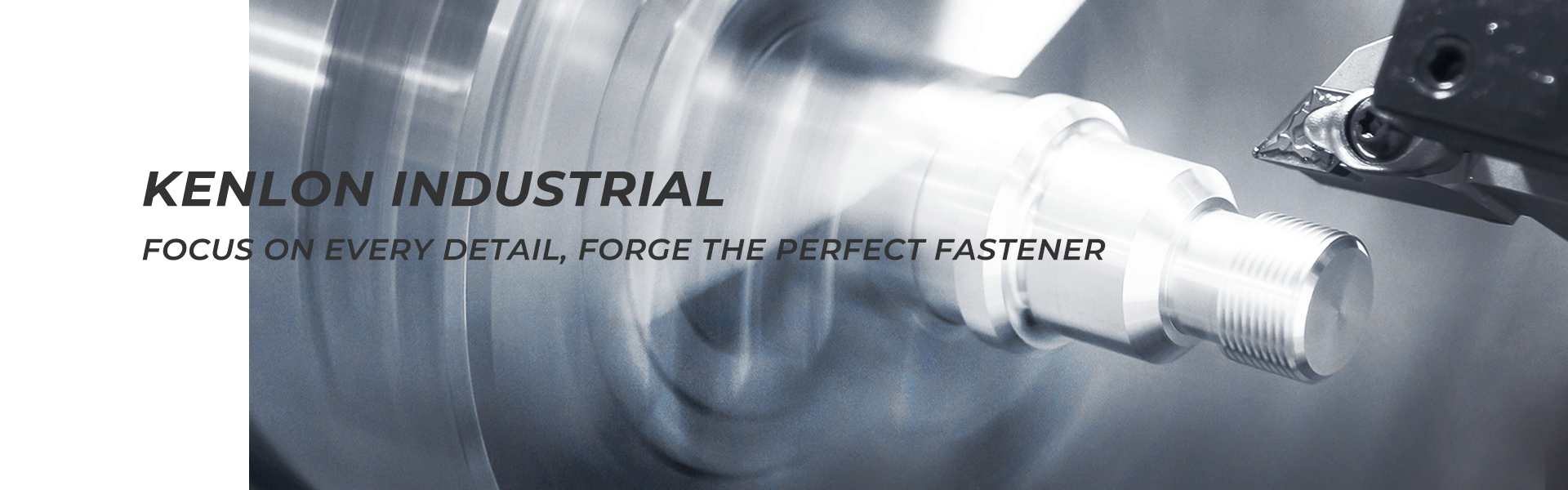
CNC (Computer Numerical Control) machining is a subtractive manufacturing process. It starts with a solid block or bar of raw material, and computer-guided cutting tools systematically remove material to create the final shape. CNC lathes are specifically designed for producing cylindrical parts like specialized screws, pins, and threaded tubes.
Precision and Flexibility
The hallmark of CNC machining is its unparalleled precision. For applications requiring micro-millimeter tolerances, concentricity, or highly complex threading that a cold header cannot produce, CNC machining is the definitive answer.
Pros of CNC Machining
- Extreme Precision and Tight Tolerances: CNC machines can easily achieve tolerances as tight as ±0.005mm to ±0.01mm.
- Complex Geometries: If you can draw it in CAD, a multi-axis CNC machine can likely produce it. It excels at intricate details, internal threading, and unique head styles.
- Zero Tooling Costs & Fast Prototyping: Since no physical molds are needed, CNC is perfect for rapid prototyping, small batch production, or urgent orders.
Cons of CNC Machining
- Slower Production Speed: Removing material takes time. CNC machining is significantly slower per part compared to cold forging.
- High Material Waste: Because it is a subtractive process, a large percentage of the raw material is machined away as scrap (swarf), which increases costs.
- Interrupts Grain Flow: Cutting into the metal severs its natural grain structure, meaning a machined part may not be as inherently strong as a cold-forged counterpart of the same material.
Side-by-Side Comparison: How to Choose?
To make the best procurement decision, consider these four primary factors:
| Feature | Cold Forging | CNC Machining |
|---|---|---|
| Best For | High-volume production (50,000+ pcs) | Low-to-medium volume, prototypes |
| Material Yield | Excellent (Nearly 100% usage) | Poor (Subtractive, high scrap rate) |
| Mechanical Strength | Superior (Continuous grain flow) | Standard (Cut grain structure) |
| Tolerance/Precision | Good (Standard industrial tolerances) | Excellent (Ultra-tight tolerances) |
| Geometric Complexity | Limited by mold release and flow | Highly flexible, intricate designs |
| Initial Cost (NRE) | High (Mold/Die creation required) | Low (Programming and setup only) |
When to choose Cold Forging: You need 100,000 custom automotive wheel bolts. The design is relatively straightforward, but they must withstand high torque and shear forces.
When to choose CNC Machining: You need 500 specialized aerospace pins with complex internal geometries and extremely tight tolerances for a new R&D project.
The Best of Both Worlds: Kenlon’s Dual Capabilities
At Kenlon Industrial Co., Ltd., we understand that modern engineering challenges rarely fit into neat boxes. Sometimes, a custom fastener requires the mechanical strength of cold forging and the ultra-tight tolerances of CNC machining.
As a professional fastener manufacturer with over 50 years of experience, Kenlon offers both advanced cold forging and precision CNC lathe processing. Furthermore, we provide Secondary Machining Services—we can cold-forge the blank to save material and maximize strength, and then use CNC machining to add complex secondary features like tight-tolerance grooves, cross-holes, or special threads.
By evaluating your blueprint, our engineering team will recommend the most cost-effective and structurally sound manufacturing process tailored to your specific application.
Conclusion
Choosing between cold forging and CNC machining doesn't have to be a guessing game. It comes down to volume, complexity, strength requirements, and budget. Partnering with an experienced manufacturer who understands the metallurgy and mechanics behind both processes is crucial to your project's success.
Ready to bring your custom fastener design to life?
Submit your blueprints to the Kenlon Industrial team today. We will conduct a thorough feasibility assessment and provide a competitive, transparent quote.
Contact Us